
JOSHUA: Moses' Servant for 40+ years

JOSHUA: Moses' Servant for 40+ Years!
The transition from shadow to command is never sudden, though the moment it happens feels like the ground has shifted beneath your feet. For Joshua, son of Nun, that moment didn't arrive in a flash of dramatic revelation but after more than four decades of watching, learning, serving, and waiting. When Moses stood before the assembled nation of Israel and declared that his time had ended, when the safety-net of forty years of supernatural guidance was suddenly withdrawn, Joshua must have felt the terrifying weight of the mantle that was now irrevocably his alone to carry!

Before we ever see Joshua commanding armies around Jericho's walls, before he allocates tribal territories or conquers Canaan's giants, we must understand the man who stood in someone else's shadow for a lifetime. Joshua did not emerge from the wilderness as a fully formed military genius or spiritual leader. He was forged slowly, deliberately, and often painfully through decades of apprenticeship under a man who spoke with the Creator face to face. This gradual preparation is what makes his story so profoundly human and eternally relevant.
The warrior-servant first appears in Scripture not as a commander but as a soldier following orders. When the Amalekites attacked Israel at Rephidim, Moses commanded Joshua to choose men and go out to fight while he himself would stand on the hilltop with the staff of Alahim in his hands. This early

battle taught Joshua a lesson that would define his entire approach to warfare - victory was never merely about military strategy or numerical superiority. When Moses' hands were lifted toward heaven, Israel prevailed in battle. When his arms grew heavy and dropped, the enemy gained ground. Joshua learned in the dust of that desert battlefield that supernatural warfare required supernatural connection, that the greatest victories were won not by might alone but by the One who commanded both heaven and earth.

For over forty years, Joshua watched the impossible become routine. He saw the Egyptian Empire dismantled through ten devastating plagues. He witnessed the Red Sea parting like curtains before the breath of Alahim, with dry ground appearing where moments before there had been only treacherous waters. He stood at Sinai's base when the mountain itself became a burning pyre of divine presence, smoke and fire mingling with thunder and lightning while the ground shook beneath millions of feet. He watched rebels like Korah, Dathan, and Abiram swallowed alive by the earth for their rebellious presumption. He saw the Shekinah-Glory descend upon the Tabernacle in such overwhelming weight that even Moses could not enter. He witnessed daily manna falling from heaven, water gushing from rock, and a pillar of cloud by day and fire by night, guiding millions through trackless wilderness.

All of this Joshua saw from a position of humble service. He was Moses' assistant, his aide-de-camp, the one who lingered near the Tent of Meeting while others scattered to their tents. When Moses went in to speak with Yahuah face to face, Joshua remained nearby, perhaps waiting for instruction, perhaps hoping for a glimpse, perhaps just learning what it meant to be constantly aware of divine presence. He was not merely a military commander but a student in the school of supernatural leadership, observing how a human mediator carried the weight of a nation's rebellion while interceding for their survival.
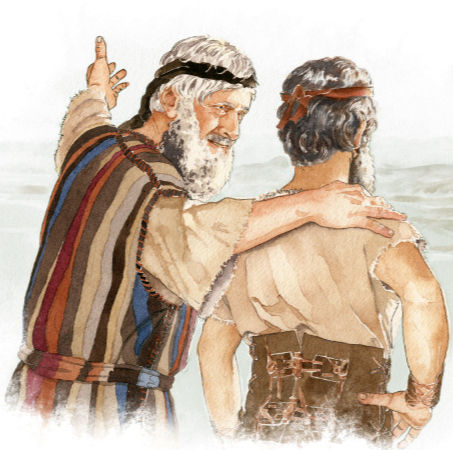
The psychological reality of this forty-year apprenticeship cannot be overstated. For four decades, Joshua never had to make the final call. Moses did that! He never bore ultimate responsibility for the nation's destiny. Moses carried that crushing weight! Joshua fought battles while Moses carried the grief of rebellion. Joshua witnessed miracles while Moses wrestled with divine frustration. There was always Moses, Aaron, wise elders, someone greater to whom Joshua could appeal, someone whose authority was unquestionable, whose connection to the Almighty was undeniable, whose voice carried the weight of Heaven itself.

And then, without warning or gradual transition, the announcement came. Moses, now 120 years old, gathered the entire nation and spoke words that must have struck Joshua like physical blows, and pierced like a knife into his heart. "I am a hundred and twenty years old now, unable to go out and come in, and I won't be your leader anymore." The phrase "unable to go out and come in" was military language, not a confession of frailty. It meant his commission had ended, his time as their commander and shepherd-leader was complete. The campaign would continue - Yahuah would indeed lead them across the Jordan, He would indeed destroy the Canaanite nations just as He had destroyed Sihon and Og - but Moses would not be leading them or be a part of it.
THE SAFETY-NET WAS GONE!

The man who had confronted Egypt's Pharaoh, who had commanded seas to part and fire to descend, who had mediated between a rebellious nation and their offended Creator - this man was climbing Mount Nebo to die... Joshua must now stand alone and lead!

What must that have felt like in the quiet moments after the public announcement? Joshua had spent his entire adult life watching Moses do what no one else could do. How do you replace a man who split seas and spoke with Alahim face to face? How do you step into sandals that seem impossibly large to fill? The voice that had always spoken through Moses would now need to speak directly to Joshua. The commands that had always come through established channels would now need fresh confirmation. The supernatural protection that had seemed guaranteed by Moses' presence would now depend entirely on Joshua's obedience and relationship with the Mighty Rock.

The emotional toll must have been crushing. This was not merely a leadership transition - it was a loss of security, certainty, and stability. Joshua had never known Israel without Moses as their shepherd-mediator.
For forty years, whenever the people sinned, Moses interceded. Whenever they complained, Moses pleaded. Whenever they rebelled, Moses negotiated with divine justice. Now Joshua would stand alone between a stubborn people and their mighty Creator, carrying both their rebellion and divine response on his own shoulders.

But Moses understood the terror his successor must have felt, which is why he called Joshua forward publicly and repeated the command that would become the refrain of the entire book that bears Joshua's name: "Be strong and courageous." This was not empty encouragement but a recognition that courage is precisely what is required when you suddenly carry the weight that once belonged to someone greater. The command was repeated because fear whispers what courage must silence - the lie that says:
"Who do you think you are?"
"You are not good enough!"
"You cannot possibly succeed"
"YOU'RE NOT MOSES!!!"
HOW DO YOU REPLACE A MAN WHO SPLIT SEAS AND SPOKE WITH ALAHIM FACE TO FACE? ... YOU DON’T! YOU STEP INTO YOUR OWN ASSIGNMENT ... LISTENING, TRUSTING & OBEYING!

Joshua was never meant to be Moses! He was meant to be Joshua, with his own calling, his own relationship with the Almighty and a divine mandate to fulfil in this wild, wilderness Quarry! The transfer of leadership would be supernatural in its timing and divine in its authorisation, but the great pressure would remain relentlessly real.
Before Joshua ever led Israel into battle, before he faced down Jericho's fortified walls or Canaan's giants, he first received a warning that would define his entire leadership philosophy. Deuteronomy 32 contains the Song of Moses, and though Moses delivered it, Joshua was present as it was spoken, perhaps even assisting as Moses taught it to the people. This was not sentimental poetry but Covenant Reality - a stark prophecy about the nation he was being called to lead. The Song revealed that Yahuah

is the Mighty Rock, the Tsûr - Hebrew for a towering cliff or mountain ridge, not merely a decorative stone or pebble. Joshua had watched Israel drink from that Rock in the wilderness. He had seen that Rock defend them against impossible odds. He had learned that when protection was withdrawn, even one enemy could scatter thousands. Strength was never in numbers, but entirely relational. If the Rock fought for them, they were unstoppable. If the Rock withdrew, they were fragile!

But the Song also revealed something terrifying: Israel was prone to rebellion. Joshua was not inheriting a perfect nation but a stubborn, hard-hearted one. He heard the prophecy that Israel would forget, rebel, chase other deities, and suffer exile. Imagine hearing that your future leadership would include watching the very people you lead turn against the One who delivered them, knowing that divine judgment would inevitably follow. Yet Joshua must lead this nation of Israel anyway!

This is courage - moving forward when you know the future includes failure, when you understand that not everyone will follow you, when you realise that perfect outcomes are not guaranteed. The Song taught Joshua that his leadership was not contingent on Israel's perfection but on Alahim's faithfulness, not on the people's response but on the Rock's reliability!
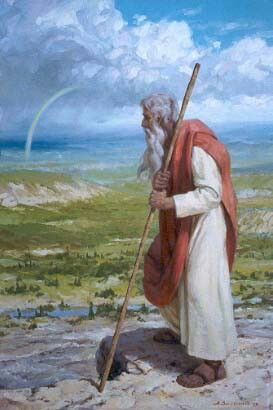
The death of Moses represents one of Scripture's most poignant moments of leadership transition. Moses climbed Mount Nebo and received a supernatural vision no human eye could naturally perceive—from Dan in the far north to Judah in the south, the entire Promised Land spread before him in panoramic view. Then he died, and Yahuah Himself buried him in a valley near Beth-Peor, hiding the location so that no one could turn his grave into a shrine of idolatry. The greatest prophet Israel had ever known disappeared from history without monument or marker, leaving Joshua standing in the plains of Moab with thirty days of mourning and a lifetime of preparation suddenly put to the test. No more going to Moses for clarification. No more asking Aaron for priestly confirmation. No more watching someone else carry the nation's grief. Joshua must now hear for himself, obey for himself, and lead for himself.

What must that first night after Moses was gone have been like? The weight of two million people, the Jordan still uncrossed, Jericho still fortified, giants still occupying the land - Joshua had seen miracles for forty years, but always from behind Moses' leadership. Now the voice must speak to him directly. Now the command must come to him personally. Now the obedience must be his alone.

This is the terrifying beauty of succession - there is always a moment when the servant becomes the leader, when watching becomes doing, when preparation becomes performance. Joshua's forty-year apprenticeship teaches us something critical about leadership development: it is not built in the spotlight but forged in proximity, obedience, and long hidden faithfulness. Joshua fought when told, waited when told, followed when told, and stayed near the Tent when others wandered off. He was not ambitious but available, not seeking a position but remaining faithful in his present assignment.

The Book of Joshua is not merely about military conquest or territorial allocation. It is about stepping from shadow into responsibility, about trusting the Mighty Rock without leaning on the shepherd Moses, about hearing the divine voice without a human mediator. Joshua's entire life had prepared him for this one terrifying moment - the moment when Moses was gone, when the command came fresh from heaven: "Be strong and courageous!"

The Rock had not changed. The Covenant had not changed. The land still awaited. But the mediator had shifted. And that shift required a kind of courage that only comes from knowing Who stands behind the command, from understanding that the Mighty Rock who had been Moses' security would now be Joshua's strength!

As we begin this study of the Book of Joshua, we do so recognising that we are stepping into the story of a man who watched the impossible become possible for forty years before being asked to make it happen himself. We are entering the narrative of someone who learned that leadership is not about becoming someone else but about becoming fully who you were created to be, under the authority of the One who never changes. The plains of Moab are behind us now. The Jordan stands before us. And Joshua is about to step forward, leading a nation into their destiny while discovering his own along the way.


Comments